If you have ever watched a flight attendant walk down the aisle with a calm smile while managing a cabin full of passengers, safety checks, and service standards all at once – and thought, “I want to do that” – you are not alone. Cabin crew careers remain one of the most sought-after entry points into the aviation industry, and Bahrain, as a growing GCC aviation hub, is an excellent place to start.
But here’s what most beginners get wrong: cabin crew training isn’t just about grooming and gestures. Airlines are hiring for safety competence, crisis management, and world-class customer service – and that means your training foundation matters more than your resume photo.
This guide breaks down exactly what cabin crew training in Bahrain involves, what skills airlines actually look for, the eligibility criteria, and how to build a credible training path before you ever step into an interview room.
What Does a Cabin Crew Member Actually Do?
A cabin crew member – also called a flight attendant – is responsible for far more than serving meals. Their core duties include:
- Conducting pre-flight safety briefings and equipment checks
- Managing onboard emergencies, including evacuations, medical situations, and turbulence
- Delivering consistent, brand-aligned passenger service
- Handling difficult passengers and cross-cultural communication with composure
- Ensuring compliance with aviation safety and security regulations
In short, cabin crew sit at the intersection of safety authority and customer experience – which is exactly why airlines invest heavily in structured training before certification.
Why Train for Cabin Crew in Bahrain?
Bahrain has positioned itself as a strategic aviation and travel hub in the Gulf, sitting close to major carriers and airports across the GCC. A few reasons Bahrain is a smart place to begin cabin crew training:
- Proximity to major GCC airlines – Bahrain’s location makes it a convenient base for candidates targeting airlines across the Gulf region.
- Ministry of Labor–approved training institutes – Bahrain hosts vocational training Centres that are officially authorized, giving your certification real regulatory credibility.
- IATA-recognized aviation education – Many candidates strengthen their cabin crew applications with globally recognized IATA certifications in travel, tourism, and airline customer service – something airlines respect during recruitment.
- Growing tourism and airline traffic – As explored in our guide on airport careers in Bahrain, the Kingdom’s aviation and airport sector is expanding, creating consistent openings for trained candidates.
Eligibility Criteria for Cabin Crew Training
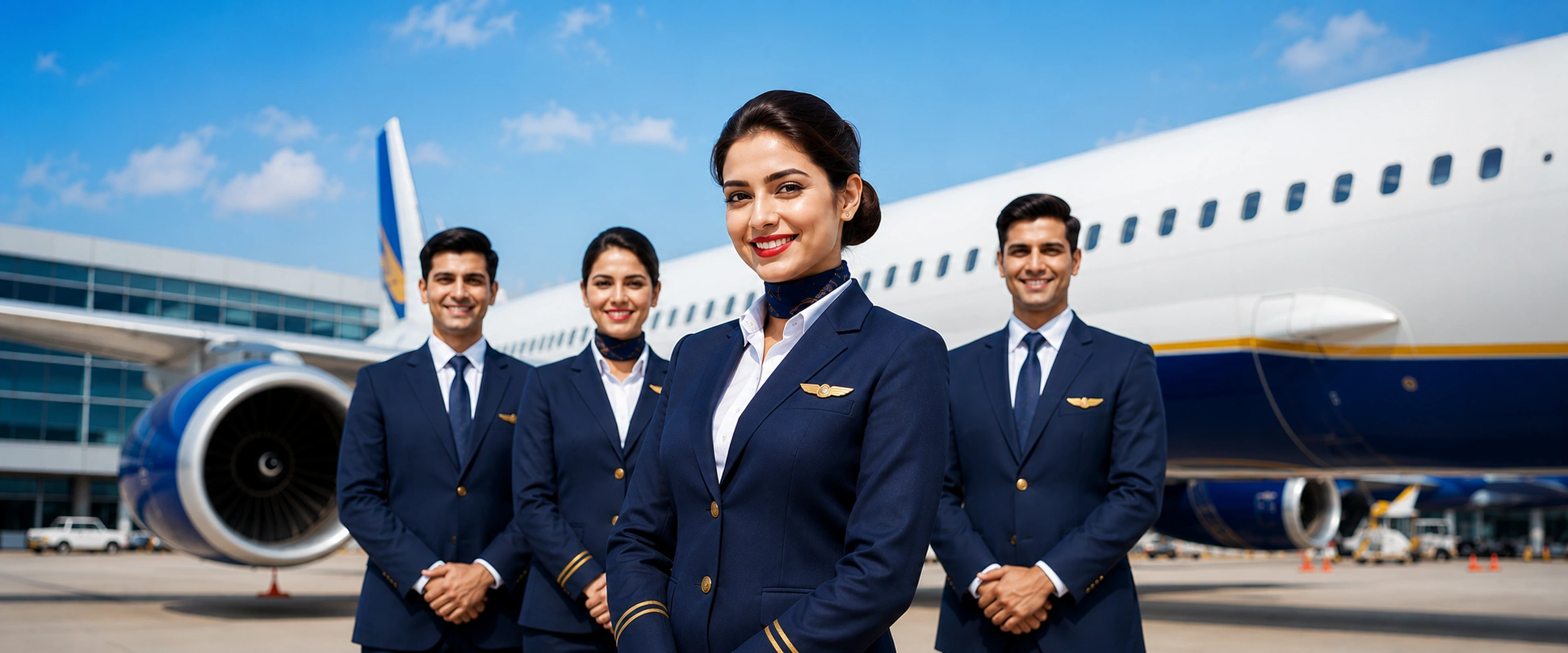
While exact airline recruitment criteria vary, most cabin crew training programs and airline assessments generally expect candidates to meet the following baseline requirements:
- Minimum age of 18 years (varies by airline)
- High school diploma or equivalent; a diploma in travel, tourism, or hospitality is a strong advantage
- Fluency in English (additional languages are a bonus)
- Good physical fitness and a valid medical certificate
- Minimum height and reach requirements (airline-specific)
- No visible tattoos in uniform (airline-specific policy)
- Strong communication and interpersonal skills
If you are unsure whether you meet the criteria, a structured travel and aviation foundation course is a smart first step – it builds your industry knowledge while you prepare physically and academically for airline-specific assessments.
What Does Cabin Crew Training Cover?
A well-structured cabin crew preparation program typically blends safety knowledge, service skills, and industry etiquette. Here’s what beginners should expect to learn:
1. Grooming and Personal Presentation
Airlines maintain strict grooming standards. Training covers uniform etiquette, posture, and professional presentation appropriate for airline branding.
2. Communication and Customer Service
This is the single most transferable – and most tested – skill set. You’ll learn how to manage passenger requests, de-escalate conflict, and deliver service with consistency, regardless of how stressful the situation gets.
3. Safety and Emergency Procedures
While full safety certification (SEP) training happens with the airline itself post-hiring, foundational aviation courses introduce candidates to safety culture, communication protocols, and situational awareness expected in the industry.
4. Aviation Industry Knowledge
Understanding how airlines, airports, ticketing, and travel operations work gives candidates a real edge in interviews. This is where a recognized program like the IATA Foundation in Travel and Tourism Diploma becomes valuable – it builds the industry fluency recruiters notice immediately.
5. Group Discussions and Mock Interviews
Airline recruitment days are notoriously competitive, often involving group exercises and panel interviews. Practicing these formats with trainers who understand airline hiring patterns significantly improves outcomes.
How to Build Your Cabin Crew Career Path in Bahrain
Since cabin crew-specific certification is usually issued directly by the hiring airline after recruitment, the smartest strategy for beginners in Bahrain is to build a strong aviation and customer service foundation before applying. Here’s a practical roadmap:
Step 1: Build your customer service foundation: Enroll in a course like Serving the Travel Customer, which is specifically designed to develop customer loyalty skills, professional handling of difficult customers, and frontline communication – all directly transferable to cabin crew roles.
Step 2: Strengthen your airline industry knowledge: The IATA Airline Customer Service course sharpens cross-cultural passenger management and service excellence specifically for airline environments, giving you a distinct edge over candidates with no formal aviation background.
Step 3: Understand the wider travel and aviation ecosystem: A broader qualification such as the IATA Foundation in Travel and Tourism Diploma helps you speak the language of the industry – ticketing, travel documentation, and global aviation standards – which recruiters notice during interviews. Our detailed breakdown of the IATA Foundation course overview and benefits explains exactly what this diploma covers.
Step 4: Prepare for recruitment days: Practice grooming standards, mock interviews, and group assessments – many training centres, including ours, offer placement guidance alongside coursework.
Step 5: Apply broadly, and keep your options open: If cabin crew recruitment takes time, a background in travel and tourism also opens doors to related aviation roles – something we cover in depth in our guide to airport careers in Bahrain and best careers in the airline and airport industry.
Skills Airlines Look for in Cabin Crew
Beyond the checklist of eligibility criteria, airlines are really assessing:
- Composure under pressure – Can you stay calm and think clearly during an unexpected situation?
- Genuine hospitality – Is your service instinctive, not scripted?
- Teamwork – Cabin crew operate as a coordinated team; recruiters watch how you interact in group exercises.
- Cultural adaptability – Bahrain’s aviation industry serves an extremely diverse, international passenger base.
- Attention to detail – From safety checks to service standards, small oversights matter in this industry.
These are exactly the competencies built into structured customer service and travel industry training – which is why candidates with formal coursework consistently perform better in recruitment assessments than those relying on personality alone.
Salary and Career Growth in Cabin Crew
Cabin crew salaries vary significantly by airline, base, and experience level, and typically include a base salary plus flying allowances, accommodation, and travel benefits. While entry-level positions are competitive to secure, cabin crew roles offer strong long-term growth into:
- Senior cabin crew / Purser roles
- Cabin crew trainers and instructors
- Inflight service managers
- Ground-based airline roles in customer service or operations
If you’re weighing cabin crew against other aviation career tracks, our guide on choosing between travel agent and airline careers in Bahrain and best careers in the airline and airport industry can help you compare options before committing.
Akbar Training Centre: Your Launchpad Into Aviation Industry
Akbar Training Centre is a Ministry of Labour–approved vocational institute in Bahrain and an IATA Premier Circle Authorised Training Centre, recognised for 15 consecutive years for performance excellence at IATA Montreal. While cabin crew certification itself is issued by individual airlines post-recruitment, we help beginners build the strongest possible foundation for a cabin crew career through:
- Serving the Travel Customer – customer handling, loyalty building, and frontline communication skills essential for cabin crew interviews
- IATA Airline Customer Service – advanced cross-cultural passenger management and airline-specific service excellence
- IATA Foundation in Travel and Tourism Diploma – comprehensive industry knowledge covering ticketing, travel documentation, and global aviation standards
Our graduates have gone on to secure aviation and travel roles across Bahrain and the wider GCC, supported by expert faculty and dedicated placement guidance. If you’re also exploring the cargo and logistics side of aviation, our article on the IATA Cargo course benefits and career opportunities and the complete guide to IATA training fees and career paths in Bahrain are worth reading too.