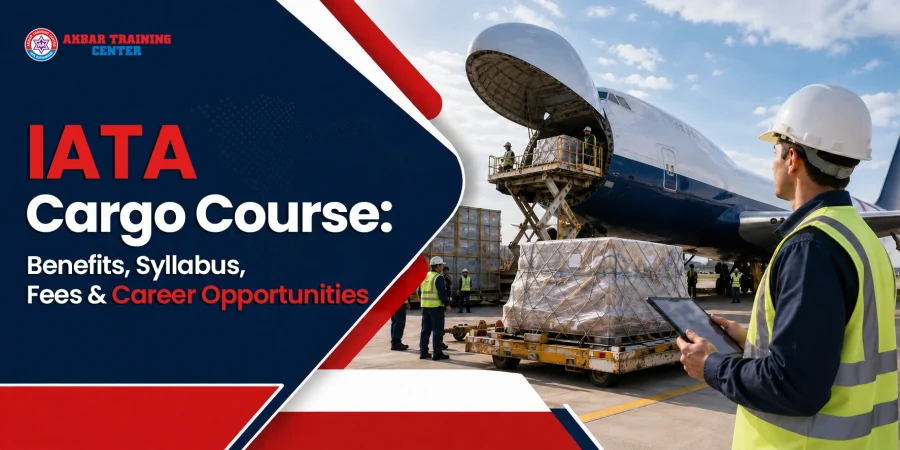
Air cargo is one of the fastest-growing sectors in global aviation. Billions of dollars worth of goods travel through air transportation each year which creates a strong need for trained cargo industry experts. The air cargo industry provides a stable career path with global recognition and excellent growth opportunities.
Air cargo functions as an essential lifeline enabling worldwide commercial operations. Annually, global air networks move over 62 million tonnes of freight—including critical medical supplies, industrial equipment, perishable produce, and delicate electronics. The trained professional who handles every successful shipment operation knows how to manage these processes effectively.
The IATA Cargo Course provides students with the necessary training to reach their professional goals. This blog provides a comprehensive overview of the course curriculum, its key benefits, and the career opportunities available upon successful completion of the program.
What is the IATA Cargo Course?
The IATA Cargo Course functions as an international certification program which establishes fundamental knowledge for students who want to learn about air cargo operations. The program teaches students about handling cargo and creating cargo documents while also instructing them about dangerous goods rules and methods to protect cargo shipments. The course provides essential aviation and logistics knowledge which airlines and freight companies demand from their global recruitment process.
IATA Cargo Course Syllabus
The IATA Cargo Course covers a comprehensive range of topics that prepare you for real-world air cargo operations. Here is what the syllabus includes:
- Introduction to Air Cargo: Overview of the air cargo industry, key players, and how the global freight system works
- Cargo Documentation: Understanding air waybills, cargo manifests, and all essential shipping paperwork
- Cargo Acceptance and Handling: Procedures for accepting, processing, and handling different types of freight safely
- Dangerous Goods Regulations: Identifying, classifying, and handling hazardous materials in compliance with IATA DGR standards
- Special Cargo Handling: Proper procedures for live animals, perishables, valuables, and fragile shipments
- Cargo Security: Understanding security regulations, screening procedures, and compliance requirements
- Cargo Rating and Tariffs: How air cargo is priced, rated, and charged across different routes and carriers
- Cargo Claims and Irregularities: Handling damaged, lost, or delayed shipments professionally and correctly
Every module is designed to reflect real industry standards so that when you finish the course, you are genuinely job-ready from day one.
Top Benefits of the IATA Cargo Course
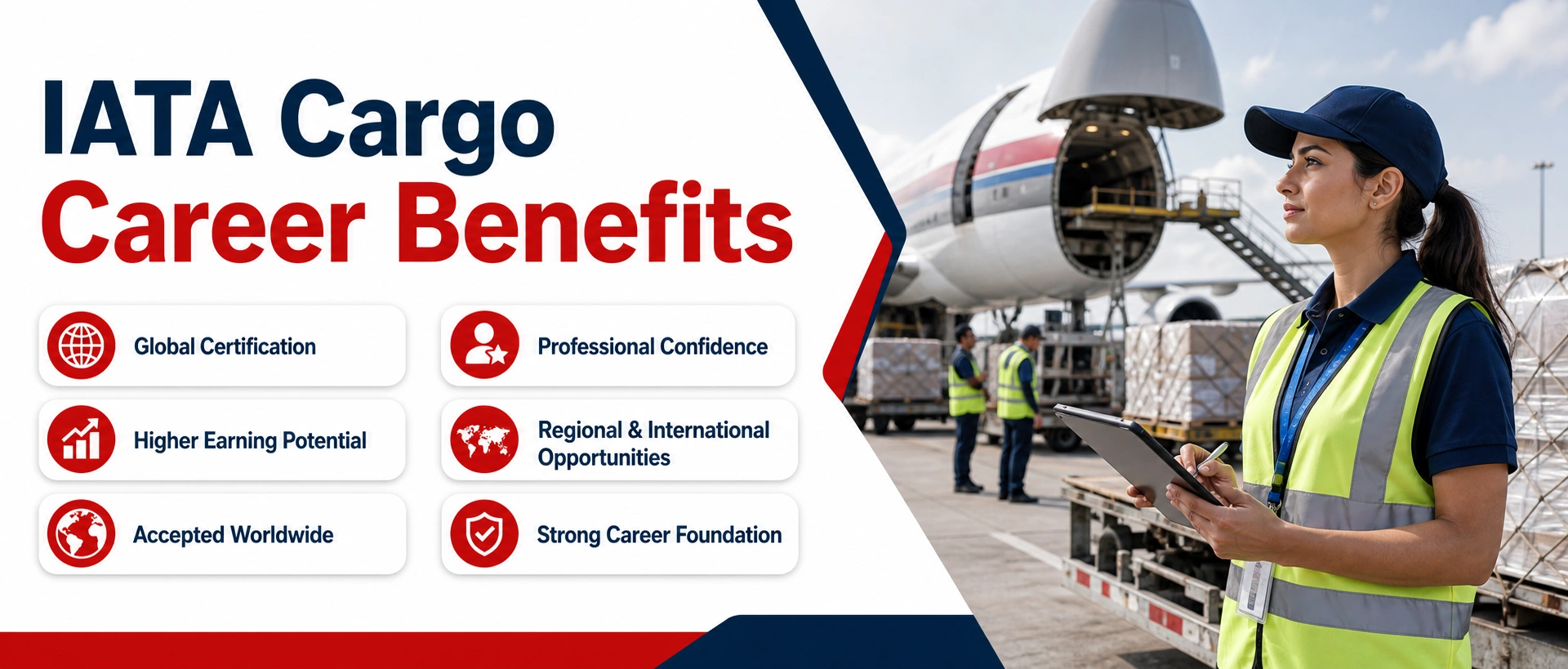
The IATA Cargo Course serves as an excellent career investment for individuals who want to establish themselves in aviation and logistics operations. Here is why this certification stands out:
- Globally Recognized Certification: IATA serves as the premier global trade association for airlines, establishing the standardized rules and commercial frameworks used by the entire aviation industry. IATA awards certifications which all employers around the world recognize as proof of professional competence.
- Higher Earning Potential: Certified professionals who work in cargo and logistics fields receive higher salaries than their uncertified colleagues who perform the same duties.
- Accepted by Airlines and Freight Companies Worldwide: The certification is recognized by airlines, freight forwarders, and logistics companies worldwide. The certification maintains its global value because it is universally recognized by commercial airlines, freight forwarders, and ground handling organizations.
- Builds Professional Confidence: Learning industry regulations, documentation procedures, and cargo handling standards helps you start your career with confidence from day one.
- Opens Doors Regionally and Internationally: The certification opens career opportunities across the Gulf region, where the air cargo industry is growing rapidly.
- Foundation for Career Growth: This course is your starting point. The program leads students toward their next step of learning which involves dangerous goods handling and cargo security management and aviation operations management.
The IATA Cargo Course provides more than basic job training because it helps students develop professional credibility which leads to a successful career in aviation cargo management.
Career Opportunities After Completing an IATA Cargo Course
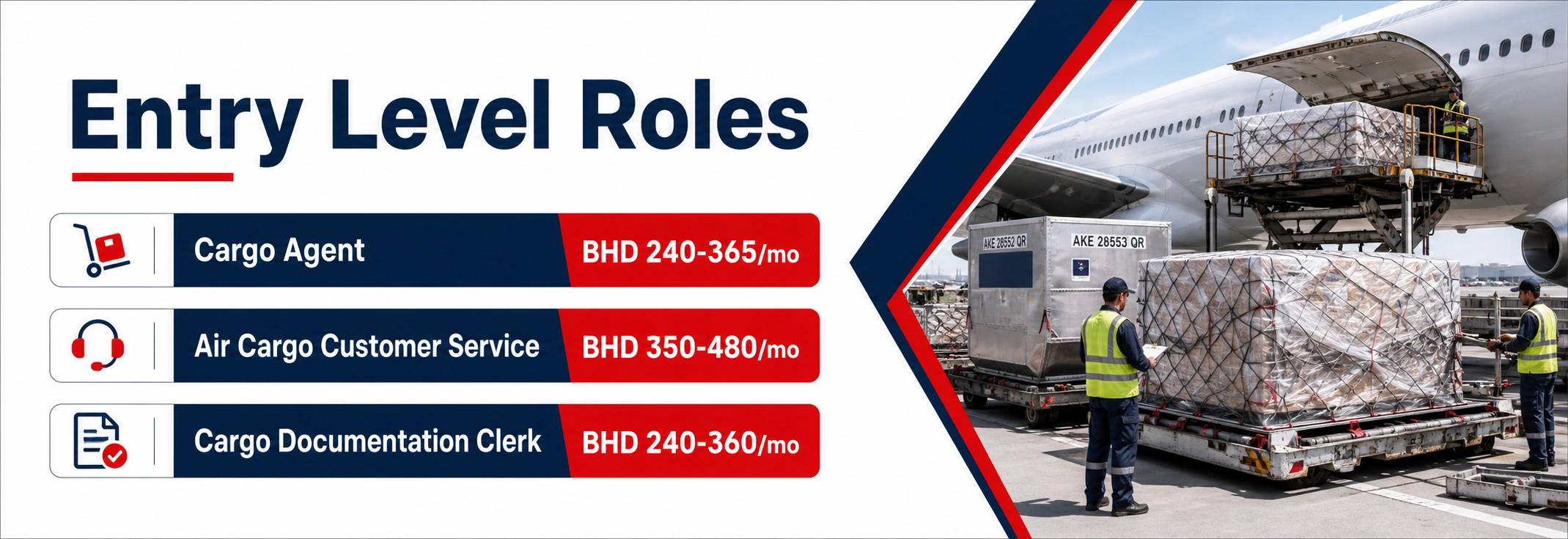
The air cargo industry offers a wide range of specialized career opportunities. Here is a category-wise breakdown of the roles you can pursue and what you can realistically expect to earn:
Entry Level Roles
- Cargo Agent
Your first step into the industry. You handle cargo acceptance, documentation, and basic freight coordination at airports or cargo terminals.
Expected Salary: BHD 240 to BHD 365 per month
- Air Cargo Customer Service Representative
You work directly with clients, freight forwarders, and shippers — managing bookings, tracking shipments, and resolving cargo queries.
Expected Salary: BHD 350 to BHD 480 per month
- Cargo Documentation Clerk
Responsible for preparing and verifying air waybills, cargo manifests, and all shipping paperwork with full accuracy.
Expected Salary: BHD 240 to BHD 360 per month
Mid Level Roles
- Freight Forwarder
You coordinate the movement of cargo between airlines, customs authorities, and clients — managing the entire shipment journey from origin to destination.
Expected Salary: BHD 400 to BHD 600 per month
- Dangerous Goods Specialist
A highly specialized and in-demand role. You ensure all hazardous materials are correctly classified, packaged, and handled in full compliance with IATA DGR regulations.
Expected Salary: BHD 550 to BHD 900 per month
- Air Cargo Coordinator
You oversee the scheduling, tracking, and coordination of cargo shipments across multiple flights and routes simultaneously.
Expected Salary: BHD 350 to BHD 550 per month
- Customs Clearance Officer
You manage the import and export clearance process — ensuring all shipments comply with customs regulations and government requirements.
Expected Salary: BHD 350 to BHD 600 per month
- Cargo Operations Supervisor
You lead a team of cargo agents and coordinate daily operations at a cargo terminal or airline freight facility.
Expected Salary: BHD 550 to BHD 850 per month
Senior Level Roles
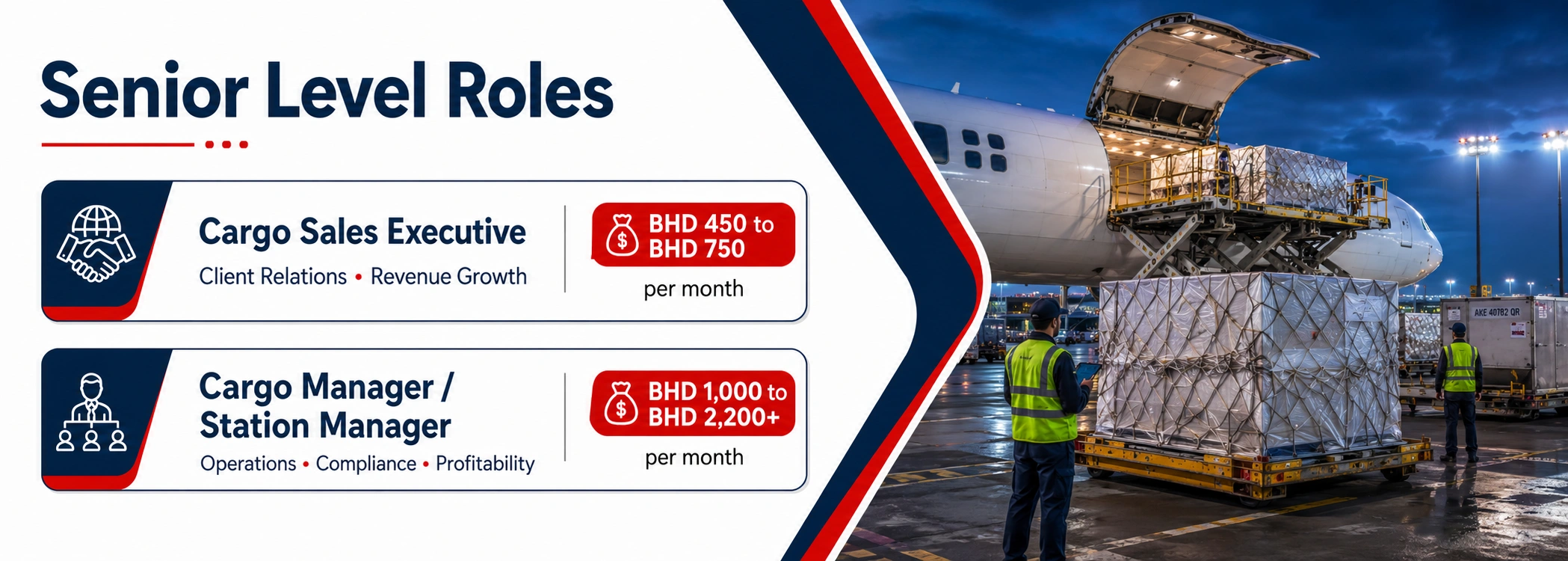
- Cargo Sales Executive
You represent airlines or freight companies — building client relationships and driving cargo revenue growth across different markets.
Expected Salary: BHD 450 to BHD 750 per month
- Cargo Manager / Station Manager
A senior leadership role where you oversee the entire cargo operation at an airport station — managing staff, performance, compliance, and profitability.
Expected Salary: BHD 1,000 to BHD 2,200+ per month