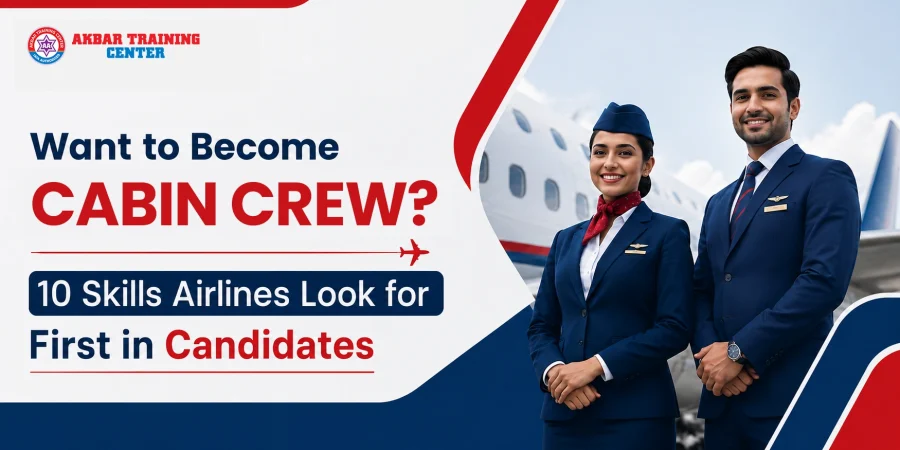
Every recruitment season, airlines flying out of Bahrain and across the Gulf receive thousands of applications for a handful of cabin crew seats. Height, grooming, and a confident smile might get you through the door, but they’re not what actually decides who gets hired.
Recruiters are trained to assess a very specific set of behavioural and safety-related competencies during group exercises, panel interviews, and role-play scenarios, and most candidates never learn what those are until after they’ve already been rejected.
This guide breaks down the 10 core skills airline recruiters consistently screen for, based on the same competencies we build into our training programs at Akbar Training Center. If you’re just starting to explore this path, our complete guide to cabin crew training in Bahrain is worth reading alongside this one.
Why Skills Matter More Than Looks in Cabin Crew Recruitment
Aviation recruiters describe cabin crew hiring as “screening for a mindset, not a resume.” Every group exercise on an assessment day is a soft skills test in disguise: how you speak, how you listen, whether you interrupt, whether you help a struggling teammate.
These behaviours reveal far more about how someone will handle a real cabin emergency or a difficult passenger than a polished CV ever could. Understanding exactly which skills are being assessed is the fastest way to prepare for them deliberately, instead of hoping your personality carries you through.
The 10 Skills Airlines Look For in Cabin Crew Candidates
Based on what recruiters consistently test for across assessment days, interviews, and group exercises, here are the ten skills that make the real difference between a shortlisted candidate and a rejected one.
1. Communication Skills
Clear verbal communication, active listening, and confident non-verbal presence are the single most heavily weighted skills in any cabin crew interview. Recruiters watch how candidates explain instructions, respond to interruptions, and maintain eye contact and open body language during group discussions.
Weak communicators are usually filtered out at the very first round, regardless of how strong their other qualifications are.
2. Customer Service and Hospitality Mindset
Beyond politeness, airlines look for candidates who anticipate needs before being asked and recover gracefully from service failures, like a missed meal request or a delayed connection. This is a trainable skill, which is exactly why our Serving the Travel Customer course focuses heavily on service recovery and loyalty-building scenarios rather than generic hospitality theory.
3. Problem-Solving Under Pressure
Cabin crew regularly face unscripted situations: a medical episode, a seating conflict, a technical delay with 200 frustrated passengers. Recruiters test this through scenario-based questions (“what would you do if…”) specifically to see how candidates structure a decision under time pressure, not whether they land on the “correct” answer.
4. Teamwork and Crew Resource Management
Known in the industry as CRM (Crew Resource Management), this is the ability to communicate effectively within a team during both routine operations and emergencies.
Group exercises are designed almost entirely to observe this: does the candidate dominate the conversation, stay silent, or actively bring quieter teammates into the discussion? Airlines consistently rate CRM as one of the top predictors of on-the-job success, which is a core theme in our IATA Airline Customer Service course.
5. Cultural Sensitivity and Cross-Cultural Awareness
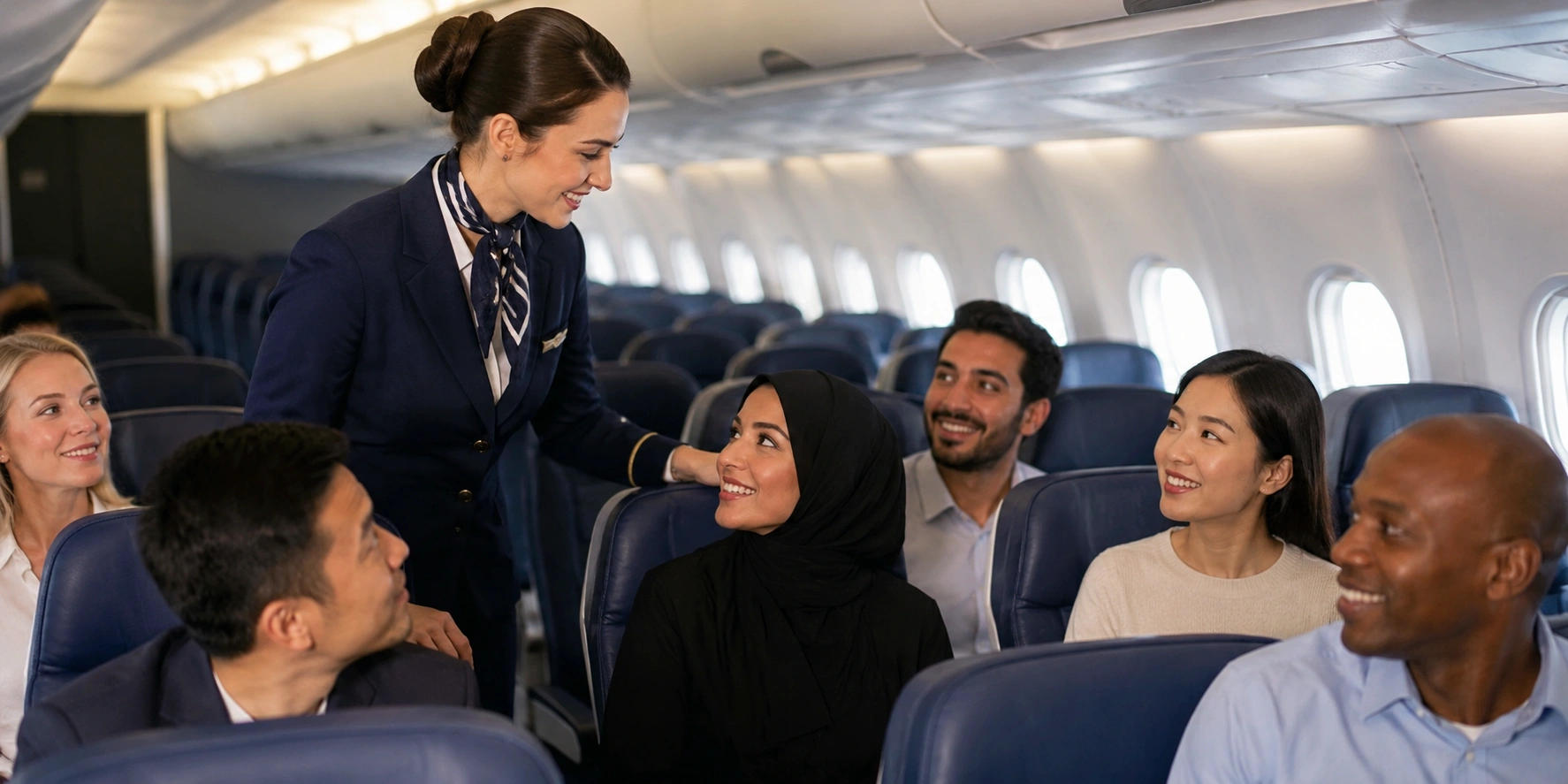
Flights out of Bahrain regularly carry passengers from dozens of nationalities in a single cabin. Recruiters look for candidates who can adjust their tone, service style, and even body language across cultural contexts without losing consistency. Building genuine fluency in global travel norms, covered in depth in the IATA Foundation in Travel and Tourism Diploma, gives candidates a real advantage here over those relying on instinct alone.
6. Composure and Emotional Regulation
Also referred to as “grace under pressure,” this is the ability to stay outwardly calm while managing internal stress, whether that’s turbulence, an aggressive passenger, or a personal off day. Recruiters sometimes deliberately create mild pressure during interviews, like unexpected follow-up questions or short response windows, specifically to observe this trait in real time.
7. Physical Stamina and Fitness
Long-haul rosters, irregular sleep cycles, and hours spent standing are physically demanding. While this isn’t tested through an interview question, airlines factor it into medical checks and expect candidates to demonstrate general fitness and energy throughout an assessment day that can run six to eight hours.
8. Attention to Detail and Safety Awareness
Every safety check, from door arming to seatbelt compliance, depends on consistency, not memory. Recruiters assess this through instruction-following exercises during the assessment day, watching for candidates who follow a sequence precisely rather than approximately. This is one of the few skills on this list that is non-negotiable, since it connects directly to passenger safety.
9. Multitasking and Time Management
A single cabin service run involves managing meal service, special requests, safety monitoring, and passenger questions simultaneously, often within a tight turnaround window. Recruiters probe for this through questions about juggling competing priorities in previous jobs or study commitments, listening specifically for how candidates sequence tasks under time constraints.
10. Adaptability and Flexibility
Rosters change, routes get reassigned, and no two flights are the same. Airlines want candidates who treat disruption as normal rather than stressful, since rigidity in this role leads quickly to burnout. This is often assessed indirectly, through questions about handling last-minute changes or unfamiliar situations in past experiences.
How to Actually Build These Skills Before You Apply
Most of these ten competencies are not personality traits you either have or don’t; they are learnable behaviours that improve significantly with structured practice. Candidates who complete formal customer service and airline-specific training walk into assessment days with rehearsed, confident responses instead of improvised ones, and it shows to recruiters almost immediately.
If you’re weighing this career against other aviation options while you build these skills, our guide to the best careers in the airline and airport industry is a useful comparison, and our breakdown of airport careers in Bahrain covers related roles that use many of these same skills.
Conclusion
Cabin crew recruitment rewards preparation over personality. The candidates who consistently clear assessment days aren’t necessarily the most naturally outgoing; they’re the ones who’ve deliberately built and rehearsed the ten skills recruiters are actually screening for. If you’re serious about this career, the smartest move is to start developing these competencies now, through structured training, rather than hoping they surface naturally under interview pressure.