Table of Contents
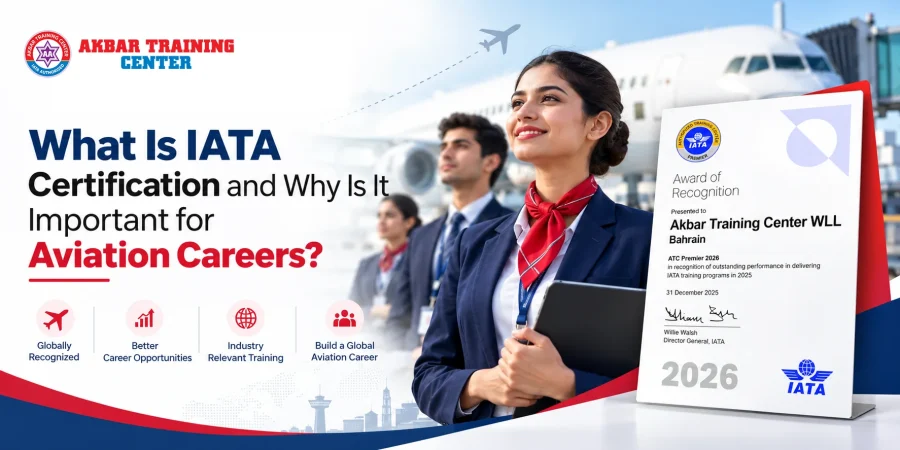
ToggleWhat Is IATA Certification and Why Is It Important for Aviation Careers?
An IATA certification may provide industry insight into aviation courses, although it will depend on the choice of the right course according to one’s career goals. IATA Training provides internationally acclaimed certificates and diplomas in the following fields: travel & tourism; airports & ground operations; cargo & logistics; safety & security; airline management.
Such qualifications may prove that an individual studying aviation has received systematic education in a particular field. Such a certificate does not provide employment opportunities or a salary abroad, but it helps prepare for professional life. This document is meant to introduce the essence of IATA certification and help in making the right choice.
What Is an IATA Certification?
An IATA certification is a professional aviation training qualification earned after completing an eligible course or program offered through the International Air Transport Association’s training system. “IATA certification” refers to the certificates and diplomas that students can earn through IATA Training. The IATA qualifications apply to different aspects of the travel and aviation industry but not to a specific course.
IATA currently offers training across areas such as:
- Travel and tourism
- Airport and ground operations
- Cargo and logistics
- Airline operations
- Safety and security
- Dangerous goods
- Management and leadership
According to IATA, the courses it offers are recognized as internationally accredited and designed through the use of knowledge and skills within the aviation industry.
Certain courses may be studied either via IATA or IATA Authorised Training Center (ATC). This means ATC is a separate training entity authorised by IATA to provide or sell certain IATA courses and diplomas utilising the IATA learning materials.
It is also important to know what an IATA certificate is not. It is a qualification obtained through professional training and is not a global license that instantly makes one eligible for all jobs in the field of aviation in any airline or airport in the world.
Why Is IATA Certification Important for an Aviation Career?
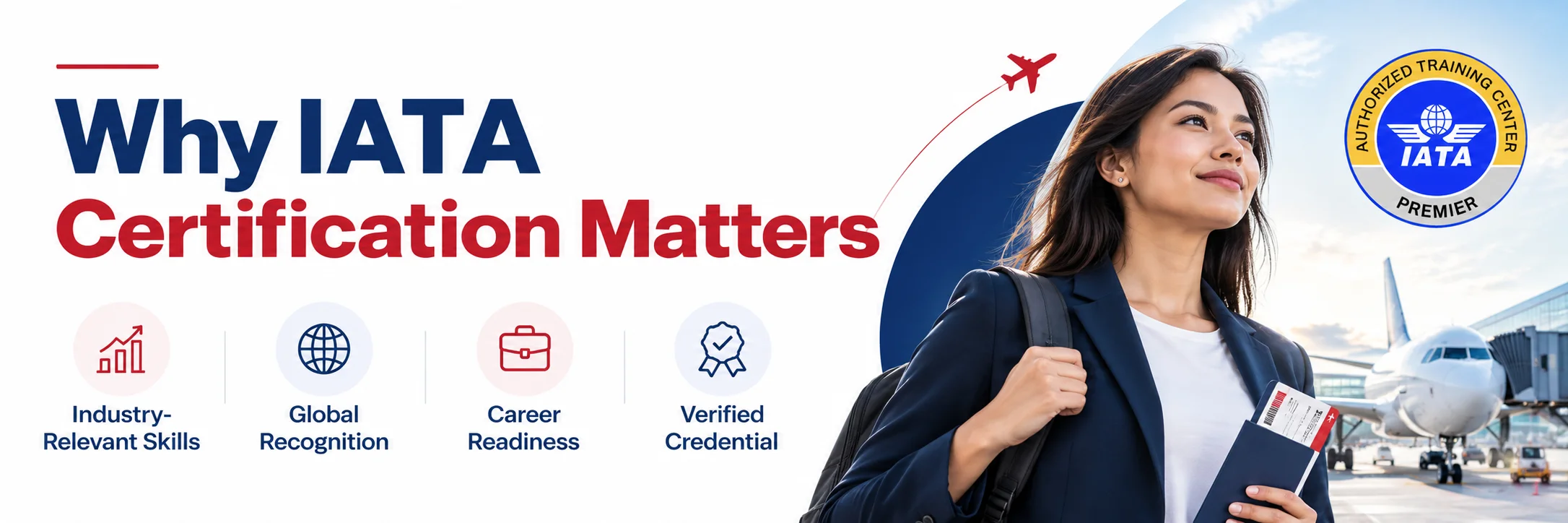
IATA certification can be valuable for an aviation career because it provides structured, industry-focused learning and an internationally recognized qualification in a specific aviation discipline.
Its real value comes from the knowledge and professional preparation behind the credential rather than from adding “IATA certified” to a résumé alone.
- It provides industry-relevant aviation knowledge: Aviation is made up of specialised functions. Someone working in reservations needs different knowledge from a cargo professional or airport operations employee. IATA training lets students study the processes, terminology, standards, and practices relevant to the field they want to enter.
- It gives your training international context: IATA describes its certificates and diplomas as internationally recognized qualifications. This can make the credential understandable beyond one local training institute, particularly when applying to organizations familiar with IATA Training.
International recognition, however, should not be confused with guaranteed international employment. Working abroad may still depend on the employer, visa rules, local regulations, experience, and other eligibility requirements.
- It can strengthen a beginner’s professional profile: Students entering aviation often have limited industry experience. Completing a relevant IATA course can demonstrate that they have undertaken structured training in a defined area such as ticketing, travel operations, cargo, or airport services.
For an experienced professional, a specialised course may instead help document additional knowledge in a new or more advanced area.
- It builds role-specific preparation: The strongest reason to pursue IATA training is when the course closely matches the work you want to do. A travel and tourism program can support knowledge needed for reservations and travel services, while understanding topics such as iata bsp accounting meaning can be relevant to professionals working with airline ticketing and settlement processes.
- The credential can be verified: IATA provides certificate-validation options for eligible qualifications. Its current certificate system also includes secured digital certificates for qualifying courses, allowing employers or other parties to confirm authenticity.
That creates a clearer relationship between training completed, qualification earned, and credential presented to an employer.
Which Aviation Careers Can IATA Courses Support?
IATA courses can support career preparation across airline, airport, travel, ticketing, cargo, logistics, and other aviation-related functions. If you are considering a foundation-level qualification, job roles you can get after completing the iata foundation course can also help you understand the types of roles associated with this training.
The key is to match the training area with the type of work you want to pursue.
| IATA Training Area | Related Career Pathways |
|---|---|
| Travel & Tourism | Travel consultant, travel agency operations, tour and reservation services |
| Fares & Ticketing / GDS | Reservation executive, ticketing executive, travel operations |
| Airport & Ground Operations | Passenger services, ground operations, airport support functions |
| Cargo & Logistics | Air cargo operations, freight forwarding, logistics support |
| Dangerous Goods | Relevant regulated cargo and dangerous-goods functions, subject to role requirements |
| Airline Operations | Airline operational and support roles |
| Management & Leadership | Professional development for supervisory or management-focused career paths |
IATA’s training-partner network covers fields including airline management, airports, cargo and logistics, ground operations, safety, security, travel and tourism, and leadership.
These should be treated as career pathways associated with the training, not guaranteed job titles after course completion.
For example, completing an airport operations course does not automatically make someone an airport manager. It can provide relevant knowledge for building a career in that part of the industry, while actual hiring depends on the employer’s requirements and the candidate’s overall profile.
Which IATA Certification Should You Choose for Your Career Goal?
Choose an IATA certification by starting with the aviation role you want and then selecting training that teaches the knowledge required for that part of the industry.
Do not select a course simply because it has “IATA” in the title. The qualification becomes more useful when there is a clear relationship between course content, your existing education, and your career direction.
| Your Career Goal | IATA Training Area to Explore |
|---|---|
| Work in travel agencies or travel services | Travel & Tourism |
| Build a career in reservations or ticketing | Fares, Ticketing and GDS-related training |
| Work around airport passenger operations | Airport or Ground Operations |
| Enter air freight or logistics | Cargo & Logistics |
| Work with regulated dangerous goods | Relevant Dangerous Goods training |
| Develop broader airline operations knowledge | Airline Operations |
| Upskill for supervisory responsibilities | Management or Leadership programs |
If you are a beginner, start with a foundation-level course appropriate to the field you want to enter rather than choosing an advanced qualification simply because it sounds more impressive.
If you already work in aviation, identify the gap you want to fill. You might need specialist knowledge in cargo, safety, operations, customer service, or management rather than another broad introductory course.
Before enrolling, check the course syllabus, eligibility, learning format, assessment method, qualification awarded, and career relevance. IATA’s current training catalogue includes courses and diploma pathways across a wide range of aviation disciplines, so course selection should be based on the specific learning outcome you need.
A useful question to ask before enrolling is: “Will this course teach knowledge directly relevant to the aviation role I am preparing for?” If the answer is unclear, seek course counselling before paying the fee.
Why Choose an IATA Authorized Training Centre?
An IATA Authorized Training Centre gives students access to eligible IATA training through an institution that has been assessed and authorized by IATA to deliver or sell those programs. IATA says Authorized Training Centers use its training materials and, for applicable programs, support supervised examinations that lead to IATA certificates or diplomas.
IATA evaluates ATCs in areas that include training standards, instructor qualifications, infrastructure, organizational capability, and knowledge of their regional market. Authorization is also subject to ongoing renewal requirements.
For students, studying through an ATC can provide several practical advantages:
- Local instructor support for eligible programs
- Structured classroom or supported learning
- Guidance through IATA course material
- Assistance with student enrolment and examination processes
- Access to an institution whose ATC status can be checked through IATA’s training network
IATA currently works with more than 450 training-partner institutions across over 90 countries, giving students access to its training network in different markets.
Before enrolling anywhere that advertises an “IATA course,” verify what qualification you will actually receive and whether the institution currently holds the relevant IATA authorization. This helps distinguish an official IATA training pathway from a local aviation course that simply discusses IATA-related subjects.
Ready to Start Your Aviation Career with IATA Training?
Choose an IATA training program that matches your career goals and build practical knowledge in areas such as travel and tourism, airport operations, ticketing, cargo, and airline services. Akbar Training Center Bahrain can help you explore suitable IATA courses and understand the training pathway before you enroll.
Explore IATA Aviation CoursesConclusion
IATA certification can be valuable when the qualification matches the aviation career you actually want to pursue. It provides structured learning in areas such as travel and tourism, airport operations, ticketing, cargo, logistics, safety, and airline operations while offering an internationally recognized professional credential.
Its value should still be viewed realistically. An IATA certificate can strengthen aviation knowledge and professional preparation, but it does not guarantee employment, salary, or an overseas job. Start with your career goal, compare the relevant IATA courses, review the curriculum and eligibility, and choose an authorized training route that fits the skills you need to develop.
Frequently Asked Questions
Eligibility varies by employer, position and applicable Bahrain employment requirements. Some programs or vacancies can also have nationality-specific conditions. Always check the individual vacancy before applying rather than assuming that every aviation role has the same eligibility rules.
Training duration depends on the pathway. Current IATA programs in Bahrain range from intensive one-week customer service training to four-to-six-month foundation and cargo programs. GDS and specialized courses can fall between these durations.
Not always. Some entry-level passenger, customer service and travel roles can have lower educational requirements, while engineering, pilot and other specialized positions require specific professional qualifications, licenses or technical education.
Yes, a career change can be approached through transferable skills and role-specific training. Customer service, communication, administration, sales and digital skills can support certain aviation pathways, while technical roles require the relevant specialized qualifications.
Include your highest qualification, relevant IATA or aviation certifications, GDS knowledge, language skills, customer service experience and technical credentials. Tailor the CV to the specific vacancy instead of submitting the same profile for every aviation role.