The objective is not to sound overly formal. You need to sound confident, respectful and easy to understand.
What Communication Skills Do Airline Staff Need?
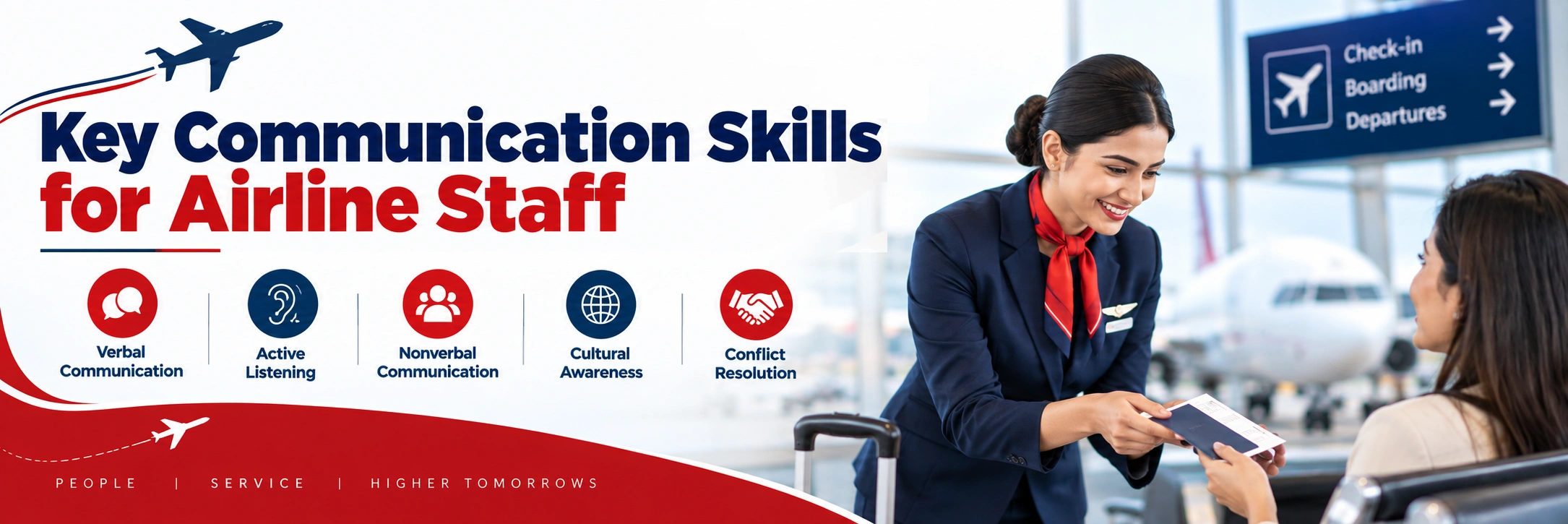
Effective airline customer service skills involve speaking, listening, body language and conflict management. You also need cultural awareness when you work with passengers from different backgrounds.
Verbal Communication
Speak clearly and organise your message before you deliver it. Use simple language when passengers may not understand aviation terminology. You may need to explain boarding rules or baggage procedures within seconds. Your message should remain short and complete.
Active Listening
Active listening involves focusing your full attention on the passenger. You should ask appropriate questions when you need more information. The skill enables you to differentiate between a need for information and one for help.
Nonverbal Communication
The way you stand, your facial expression and eye contact influence how your passengers will take your message. The body language you have must reinforce what you say. Always be friendly in your facial expressions and professional in your gestures while talking to them.
Cultural Awareness
Airports serve passengers with different languages, customs and communication styles. Cultural awareness in aviation helps you avoid assumptions. Respect differences in speaking styles, personal space and forms of address. Use simpler language when language proficiency affects understanding.
Conflict Resolution
Conflict resolution skills help you manage complaints without escalating the conversation. Start by understanding the issue before discussing available options. Stay calm, avoid blame and focus on what you can do next. This approach keeps the interaction professional.
How Communication Helps During Flight Disruptions
During a disruption, passengers need more than an announcement. They need accurate information, realistic expectations and clear direction about what happens next. Strong communication skills for airline jobs help staff manage these conversations without adding confusion or false reassurance.
The communication priority changes with the situation. A delay may require frequent updates, while a cancellation requires clear information about available alternatives.
Flight Delays
Give passengers confirmed information instead of guessing. If the airline has not confirmed a new departure time, state that clearly.
Flight Cancellations
Explain what passengers should do after a cancellation. Direct them towards the relevant rebooking or assistance process.
Baggage Problems
Listen carefully before directing passengers to baggage services. Confirm important details so they reach the right team.
Missed Connections
Passengers with missed connections often need immediate direction. Explain the next process and identify the correct airline or airport contact. India’s DGCA training requirements address disruptive passenger situations, including delays, cancellations, long queues and inadequate information. This makes communication a practical aviation skill, not just a soft skill.
How Communication Supports Airline Safety
Communication in aviation also supports passenger safety. Cabin crew must deliver instructions clearly during normal, abnormal, and emergencies.
The International Civil Aviation Organization (ICAO) identifies communication as a cabin crew competency across normal, abnormal and emergency operations. It highlights clear, accurate and concise communication alongside active listening.
A safety instruction cannot leave room for confusion. You must communicate the required action clearly and quickly.
Why Cultural Awareness Matters in Aviation

Cultural awareness in aviation helps you communicate respectfully with passengers from different countries and backgrounds. It becomes especially important at international airports, where one message may reach passengers with different languages and social expectations.
You may encounter differences in:
- Language proficiency
- Speaking styles
- Eye contact
- Personal space
- Forms of address
- Expectations around service
Global Passengers
International passengers may interpret the same words or gestures differently. A direct response may sound efficient to one passenger but rude to another. You need to adjust your communication without compromising accuracy.
Respectful Communication
Use polite language and avoid assumptions about a passenger’s behaviour, background or expectations. Pay attention to how passengers respond; their tone, expressions and questions can reveal confusion or discomfort.
Language Differences
Not every passenger will understand aviation terms or complex English. Use simple words when explaining check-in rules, boarding procedures or travel requirements. For important information, ask the passenger to confirm their understanding.
Avoiding Misunderstandings
A nod does not always mean complete understanding. Confirm critical details involving flight documents, safety instructions and travel arrangements. Cultural awareness also helps you recognise when to slow down, repeat information or seek language assistance. These skills help airline staff deliver consistent service while respecting individual differences.
How Can You Improve Communication Skills for Aviation?
You can improve communication skills for aviation jobs through repeated practice. Focus on situations that resemble actual passenger interactions.
Use this four-step routine:
- Speak: Practise answers to common passenger questions.
- Listen: Repeat key details to confirm understanding.
- Role-play: Practise delays, complaints and baggage issues.
- Review: Get feedback on your tone, clarity and response.
Role-play gives you a practical way to test your communication before you face passengers professionally.
Build Airline Customer Service Skills at Akbar Academy
Strong communication skills for airline jobs go beyond speaking fluent English. You need to listen carefully, handle pressure, understand different passengers and communicate clearly during routine and difficult situations. These skills influence passenger satisfaction, teamwork and safety across airport and airline operations.
At Akbar Academy, you can develop these abilities through aviation-focused training, practical activities and real-world passenger service scenarios, including an iata airline customer service course for learners seeking industry-focused training. Our courses cover customer service, professional communication, complaint management and cross-cultural communication. You also practise situations that prepare you for airline and airport roles.
Whether you aim for cabin crew, ground staff or passenger service positions, focused training can build your confidence and workplace readiness and help you build a successful career in airline customer service. Explore Akbar Academy’s aviation courses and take the next step toward your career.