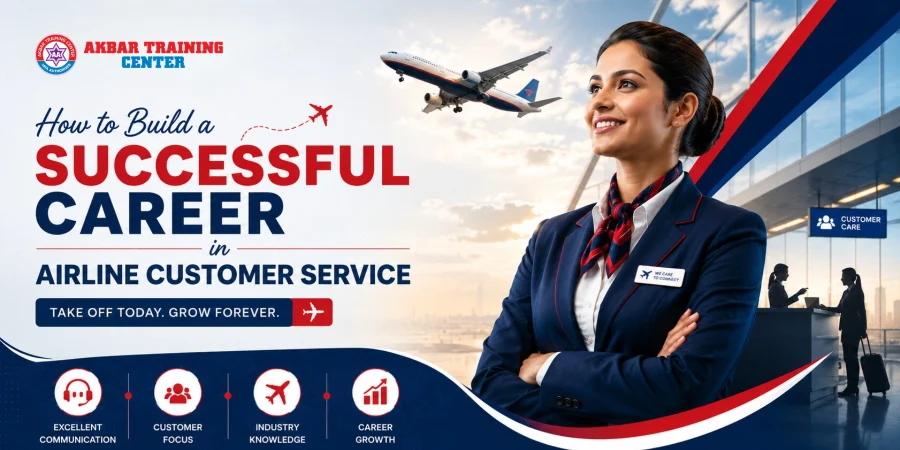
Did you ever see the professionalism of the customer service employees dealing with all the processes related to check-in and delays of flights when being at the airport? You may be interested in the job requirements for such a position. The thing which most people don’t know is that customer service jobs in airlines are among the best positions to get employed in the industry. It is the kind of job when you will communicate with people and solve real problems every day.
If you love dealing with people and looking for an exciting career option in airline customer service, then this guide is for you. This guide will talk about the requirements needed along with tips for landing yourself a job in the field.
Why Airline Customer Service Is a Growing Career
The aviation industry around the world is recovering better than ever before. According to IATA, there will be 5.2 billion air travelers around the world by 2026, almost double the figure from ten years ago.
With more passengers comes a greater requirement for skilled workers who can take care of check-ins, complaints, luggage, and boarding. Customer service for airlines is not anymore a secondary function; rather, it has become one of the most sought-after careers in the aviation industry.
In Bahrain specifically, the growth is very visible. Bahrain International Airport completed a major expansion in recent years, increasing its capacity to handle over 14 million passengers annually.
Gulf Air continues to expand its network across new destinations. This directly creates hundreds of new job openings every year for trained airline customer service professionals right here in Bahrain and across the wider GCC region.
What Does an Airline Customer Service Executive Actually Do?
Airline customer service professionals act as airline representatives who assist travelers during their check-in process until they reach their boarding gate while solving problems and sharing information and creating an effortless and calm airport experience for all passengers. Here are some of the key responsibilities that define the role of an airline customer service professional:
- Passenger Check-In and Boarding: Agents verify travel documents, assign seats, and manage boarding gates to ensure every flight departs on time without confusion.
- Flight Updates and Information: They provide passengers with instant flight information which includes schedule updates and gate assignments and delay notifications to help passengers stay informed while reducing their stress levels.
- Baggage Assistance: The agents at Baggage Assistance solve passenger inquiries about baggage rules and costs for additional weight and missing luggage and broken bags through their precise and swift processing methods.
- Ticket Reservations and Changes: They process bookings, rebookings, upgrades, and cancellations using reservation systems like Amadeus or Sabre quickly and accurately.
- Handling Complaints and Difficult Situations: Customer service agents use their skills to reduce passenger anger when flight delays occur while they work to find the best solution for each situation.
- Special Assistance and Compliance: The team protects senior travelers and children who need guardians and people with disabilities while they check travel documents and they follow all legal requirements before passengers board their flights.
Also Read: Airport Career in Bahrain: Scope, Opportunities & How to Get Started in 2026
Key Requirements for a Successful Career in Airline Customer Service
The first day at work does not require you to achieve perfection because you should focus on mastering essential skills which will lead to your fast promotion through outstanding performance.
- Clear, Confident Communication: You need to listen carefully to passenger requirements while you should deliver complicated airline information and flight announcements through basic language.
- Rapid Problem-Solving: Flight delays occur together with baggage problems which create a need for immediate resolution. The airport continues its normal operations because you maintain your composure while you solve problems right away.
- Deep Cultural Sensitivity: Airports function as worldwide transportation centers which connect different parts of the world. The workplace demands employees to treat all people equally while they communicate with others who speak different languages and follow different cultural practices.
- Patience and Empathy: The state of travelers includes feelings of stress and fatigue and worry. When you show true kindness to people in challenging situations you create positive outcomes which replace their negative experiences.
- A Sharp Eye for Detail: The process of verifying travel documents and visas and ticketing codes needs perfect precision to maintain flight safety and regulatory compliance.
- High Adaptability: Schedules, weather conditions, and gate assignments change in seconds. The terminal floor becomes your best asset because you know how to adjust to every situation.
The necessary skills for this position become available to employees through proper training programs and hands-on work experience at their workplace.
Also Read: Best Careers in the Airline & Airport Industry: Top Courses and Job Opportunities
Educational Qualifications and Entry Requirements
You do not need a university degree to enter this field. Here is what most airlines typically look for:
- High school diploma or equivalent is the basic educational requirement for most entry-level roles.
- Good English communication skills are a must, and knowing a second language is always a bonus.
- Clean background record is required because airport roles involve security-sensitive areas.
- Physical fitness to stand for long hours, handle baggage when needed, and maintain a professional appearance.
- IATA certified is not mandatory, but it gives you a definite edge over other applicants and conveys to potential employers that you take the industry seriously.
Having these basics covered puts you in a strong position to apply with confidence.
Get Professional Aviation Training
One of the most important steps to take prior to applying for employment is making sure that you receive proper training. An IATA certification will introduce you to industry standard requirements and add weight to your CV that will never be achieved through independent learning alone.
In Bahrain, Akbar Training Center is an IATA Authorized Training Center which enjoys the coveted status of being a Premier Circle training center, meaning that it enjoys the highest status available from the IATA.
Prepare for the Job Market
Once you have been certified, the next thing you should do is market yourself properly. Write a good and truthful CV, emphasizing both your certifications as well as any experience dealing directly with people in the past. Begin searching for airlines and ground handlers recruiting in Bahrain and throughout the Gulf region.
Get ready for some typical interview questions regarding situations dealing with customers. Come to the interviews dressed appropriately and be confident. Employers in this business take attitude seriously, just as they would your qualifications.
Continue Learning and Growing
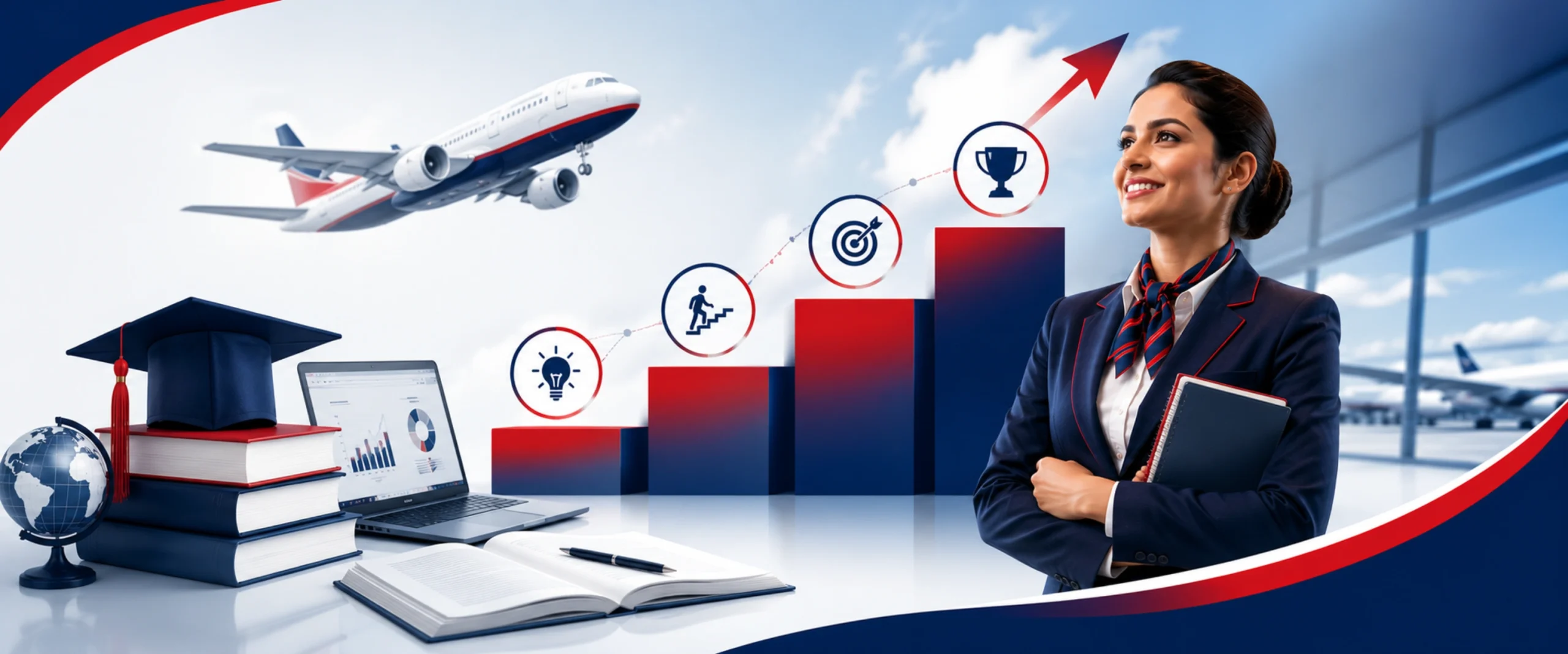
However, landing your first job should be just the beginning point for your journey into success. It is precisely those professionals that have been able to develop a highly successful career in aviation that continue working hard to progress and reach higher goals.
Enroll in some additional courses, learn to take new challenges at work, and get a good mentor. There are some IATA high-level certifications that will help you go beyond customer service and become a professional airline manager.
Learn Airline Reservation Systems
Modern airlines manage everything through computerized reservation systems — from bookings and seat assignments to cancellations. If you want to work at an airport or airline office, knowing these systems is something every employer expects from you.
The three most widely used systems are Amadeus, Galileo, and Sabre. Learning even one of these platforms makes you job-ready from day one and gives you a strong advantage over other candidates during hiring.
Develop Professional Grooming
In aviation, your appearance speaks before you even say a word. Professional grooming does not mean wearing expensive clothes or looking perfect. It simply means presenting yourself in a clean, neat and confident way that passengers can immediately trust and feel comfortable with.
This includes maintaining a neat hairstyle, wearing a clean uniform or formal attire, keeping good personal hygiene, displaying positive body language and always greeting passengers with a warm facial expression. Passengers form their first impression within just a few seconds of meeting you — and in airline customer service, that first impression can define the entire experience.
Improve Your English and Soft Skills
Many people in Bahrain worry that their English is not good enough for an airline job. But here is the truth — you do not need a foreign accent or perfect grammar to succeed in airline customer service. What matters is that passengers understand you clearly and feel respected when they talk to you.
Focus on speaking with clear pronunciation, using professional vocabulary, maintaining a polite conversational tone and practicing active listening during every interaction. A passenger who feels genuinely heard and respected will always remember that experience positively. In airline customer service, good soft skills and a warm tone of voice create far better experiences than perfect grammar ever could.
Learn to Handle Difficult Customers
Not every upset passenger is truly angry. Most of the time they are simply stressed — maybe their flight got delayed, their luggage went missing, or they had a long exhausting journey. What they really want is someone who listens to them patiently and takes their concern seriously without making them feel ignored.
When dealing with a difficult passenger, always listen without interrupting, acknowledge their concern genuinely, and explain available options honestly. Never make promises you cannot fulfill — it only makes the situation worse later. Even if a passenger raises their voice, stay calm and speak softly. Your professional behavior in that moment is your most powerful tool — it almost always brings the situation back under control.
Gain Practical Experience
Practical experience builds the kind of confidence that no classroom can give you. The good news is that you do not have to wait for a big airline job to start gaining it. Opportunities like airport internships, training institutes, travel agencies and ground handling companies are all excellent starting points for anyone serious about building a career in airline customer service.
Do not worry if your background is outside aviation. Experience from customer support roles, hotels, restaurants or any hospitality job develops the exact same communication and people handling skills that airlines look for. Every interaction you have had with a real customer in any industry counts. It all adds up and makes you a stronger, more confident candidate when you finally walk into that airline interview.
Build Knowledge Beyond Customer Service
The best airline customer service professionals are not just good at talking to passengers. They understand how the entire airport works around them. When you know what is happening at every stage — from check-in to boarding to baggage — you can answer passenger questions faster, solve problems more confidently and handle unexpected situations without panicking.
Take time to learn about airport operations, check-in procedures, boarding processes, security regulations, immigration basics, baggage handling, flight schedules and airline policies. This broader knowledge makes you stand out from other candidates who only know their own job. Employers in Bahrain and across the GCC always prefer professionals who see the bigger picture — because those are the people who get promoted faster.
Stay Calm During Pressure
Airport environments can get hectic very quickly. Flights get delayed due to weather, technical issues, air traffic congestion or sudden operational changes. In those moments, dozens of stressed passengers are looking directly at you for answers. It is completely normal to feel the pressure — even experienced professionals do.
But here is what separates good professionals from great ones — the ability to stay calm, think clearly and communicate confidently even in the most chaotic situations. Professionals who handle pressure well become the most trusted and reliable members of any airport team. And in aviation, that reputation always leads to better career opportunities.
Career Growth Opportunities
Many people start as customer service executives and feel unsure about where this career can take them. The truth is — airline customer service offers one of the clearest and most rewarding career growth paths in the entire aviation industry.
- Customer Service Executive
- Senior Customer Service Executive
- Passenger Service Officer
- Duty Officer
- Airport Operations Executive
- Ground Operations Supervisor
- Airport Manager
- Airline Customer Experience Manager
- Station Manager
With experience, professionals also move into ticketing, reservations, airline operations, corporate customer support or training departments — making this career far bigger than most people initially expect.
Benefits of a Career in Airline Customer Service
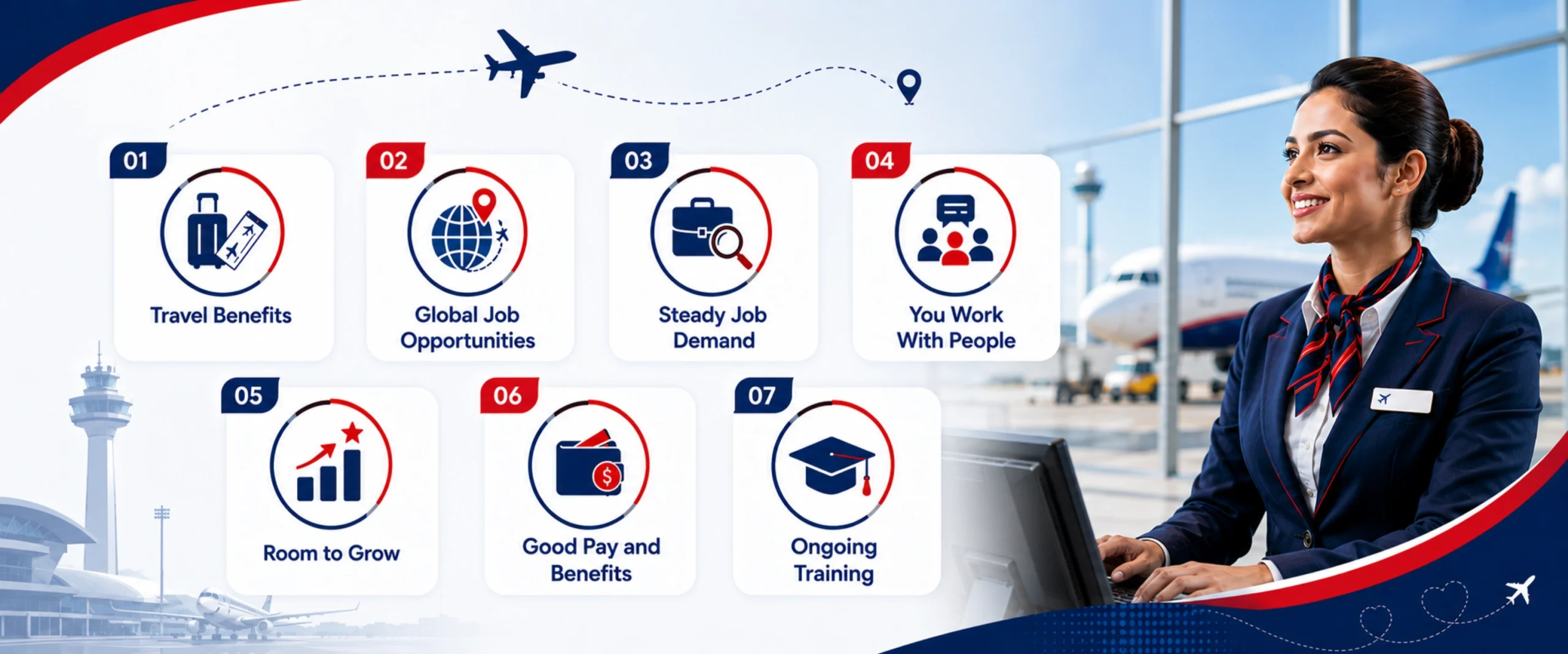
Here are some solid reasons why this career path is worth pursuing:
- Travel benefits: Most airlines offer free or discounted flights for employees and their families — a perk that is hard to find in any other industry.
- Global job opportunities: A recognized certification like IATA opens doors to airline jobs not just locally but across the world.
- Steady job demand: Airlines are always hiring, especially across the Gulf region where aviation is growing fast.
- You work with people: If you genuinely enjoy helping others, this job never feels like a chore.
- Room to grow: You can start as a customer service agent and work your way up to team leader, supervisor, or even management roles.
- Good pay and benefits: Airlines offer competitive salaries along with health insurance and other allowances.
- Ongoing training: Airlines invest in their staff, which means you keep learning and improving throughout your career.
Common Mistakes New Candidates Should Avoid
Many beginners unintentionally slow their own career growth by making simple avoidable mistakes. Recognizing these habits early gives you a real advantage over others who only realize them after losing opportunities.
- Believing English fluency alone guarantees a job
- Ignoring soft skills
- Arriving late for interviews or shifts
- Avoiding customer interaction due to nervousness
- Not learning reservation software
- Taking customer complaints personally
- Resisting feedback from senior staff
The good news is that every single mistake on this list is completely fixable. The moment you recognize and correct these habits early in your career — your growth in airline customer service becomes significantly faster and smoother.
Conclusion
Career opportunities within the field of airline customer service are well rewarded, as they require dedicated professionals with excellent interpersonal skills and a natural tendency to want to assist others. Becoming an airline customer service professional is an opportunity to become part of the most interesting industry that offers numerous possibilities for growth and development.
For those who are committed to this career choice, there are no complicated procedures involved: all you need is to Build your skills, learn more about the required entry-level conditions, obtain necessary certification, and enter the market prepared. Already thousands of people from Bahrain and the entire Gulf have become part of this career and do not regret their choice at all.
If you want to get started a successful career in airline customer service job, then Akbar Training Center is the only IATA Premier Circle Authorized Training Center in Bahrain that is ready to provide you with the Airline Customer Service course. Enroll today and start building the aviation career you have always wanted.