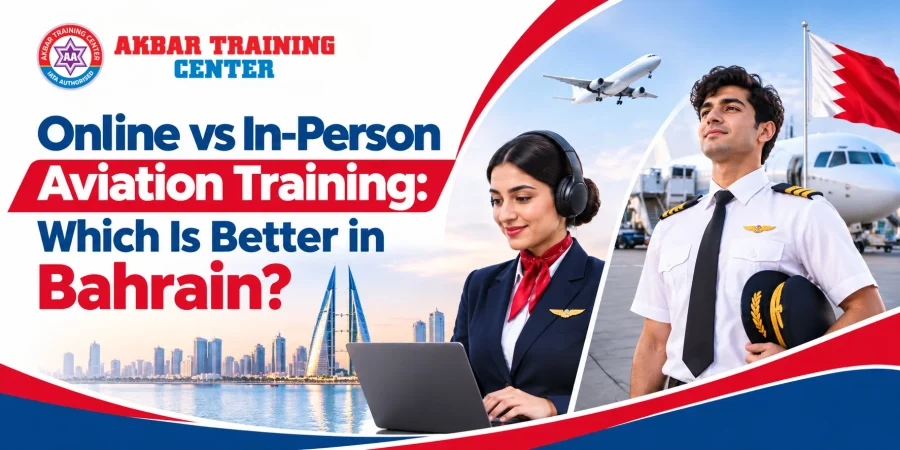
Online vs In-Person Aviation Training - Which Is Better in Bahrain

Quick Answer: Online aviation training offers flexibility, lower costs, and convenient learning, while in-person training provides hands-on practice, instant feedback, and better networking. The best option depends on your career goals and learning style. For aviation careers, a hybrid approach combining online theory with classroom practice often delivers the best results.

Thinking of joining the airline industry but wondering whether to take an online or a classroom course? You could be in trouble if you pick the wrong one. The issue of choosing between online and classroom aviation training programs is not about which one is better. The issue revolves around which one is best suited to your career and learning style. Here we compare the two in an honest and practical way, using aviation training courses in Bahrain from Akbar Training Center as examples. Let’s get started!

What Is Online Aviation Training?

Online aviation training means you learn through a screen instead of a classroom. It can be live video classes or recorded lessons you watch whenever you like. Many learners choose online IATA courses because they can study from home. Common features include:

  • Live virtual classes and recorded video lessons
  • Digital notes and practice quizzes
  • Flexible study timings
  • Online doubt-clearing with trainers
  • Mock tests and online exams

Pros of Online Aviation Training

  1. Study from anywhere: Learn from home or while travelling, with no daily trip to a centre.
  2. Flexible timings: Pick study hours that fit around your job, college or family.
  3. Lower overall cost: No commute, fuel or rent for a nearby room, so total spending usually drops.
  4. Your own pace: Replay a tough topic as many times as you need without feeling rushed.
  5. Good for working people: You can pick up a new skill without leaving your current job.
  6. Wider choice of trainers: Distance stops limiting which instructor or centre you can learn from.
  7. Recorded lessons: Missed a class? Watch the recording later and catch up.
  8. Digital study material: Notes, quizzes and mock tests stay on your phone or laptop.
  9. Quick revision: Search and revisit any topic before an exam in minutes.
  10. Builds tech comfort: Getting used to online platforms helps in jobs that run on digital tools.

Cons of Online Aviation Training

  1. Little hands-on practice: Skills like using a booking system are harder to build without live guidance.
  2. Needs strong self-discipline: Nobody reminds you to study, so lessons pile up fast.
  3. Slower doubt clearing: Replies can take hours, while a classroom answer is instant.
  4. Depends on internet: A weak connection can cut off a live class at the worst moment.
  5. Fewer networking chances: You meet fewer classmates and industry contacts.
  6. Easy to get distracted: Phone, family and notifications pull your attention away.
  7. Less personal feedback: Trainers can’t always see where you’re struggling.
  8. Screen fatigue: Hours of video lessons get tiring and focus drops.
  9. Harder to practise communication: Role-play and body language need real people.
  10. Quality varies: Not every online course is recognised, so check the provider’s approval first.

What Is In-Person Aviation Training?

In-person aviation training means attending classes at a training centre with a trainer and classmates. Everything happens face to face, from lectures to practice sessions. If you’re looking at IATA training in Bahrain, Akbar Training Center in Manama is an IATA Authorized Training Center. Typical features include:

  • Fixed class schedules
  • Live teaching with instant feedback
  • Hands-on practice with systems and documents
  • Group discussions and role-play
  • Classroom access and direct trainer support

Pros of In-Person Aviation Training

  1. Instant answers: Ask a doubt and get it solved on the spot.
  2. Hands-on practice: Work on real systems and documents with a trainer watching.
  3. Built-in routine: Fixed class timings keep you on track.
  4. Personal feedback: Trainers spot your mistakes early and correct them.
  5. Better communication skills: Role-play and group talks build confidence for customer-facing jobs.
  6. Networking: Classmates and trainers can become useful industry contacts.
  7. Fewer distractions: A classroom keeps your focus on the lesson.
  8. Peer learning: You pick up tips from other students’ questions.
  9. Easier exam preparation: Trainers tell you what to revise and how exam questions are framed.
  10. Career guidance: Trainers can share real job tips and advice on where to apply.

Cons of In-Person Aviation Training

  1. Travel time and cost: A daily commute adds expense and eats into your day.
  2. Fixed schedule: Hard to fit around a full-time job.
  3. Higher fees: Classrooms, trainers and facilities often push the total cost up.
  4. Limited by location: You can only choose centres within reach.
  5. Missed class, missed learning: Catching up isn’t always easy.
  6. Group sets the pace: Fast learners wait, and slow learners feel pressure.
  7. Less flexibility: Hard to pause or reschedule in the middle of a course.
  8. Batch size matters: In a big batch, you may not get enough attention.
  9. Long time commitment: Some courses need months of regular attendance.
  10. Relocation: Students from other cities may need to move or stay nearby.

Online vs In-Person Aviation Training: Key Differences

Both methods can lead to a good career, but they work differently. This table shows how they compare on the points that matter most when choosing between online vs in-person aviation training.

Factor Online Training In-Person Training
Location Anywhere with internet At the training centre
Schedule Flexible Fixed
Cost Usually lower overall Usually higher
Hands-on Practice Limited Strong
Doubt Clearing Slower Instant
Trainer Feedback Less personal Direct and personal
Networking Limited Strong
Self-Discipline Needed High Moderate
Best For Theory and busy schedules Practical skills and beginners

Which Aviation Training Method Is Better for Different Career Paths?
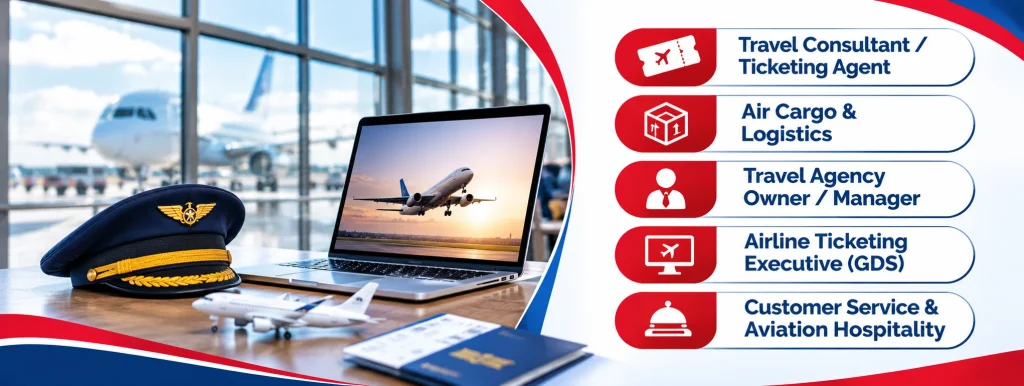
Which Aviation Training Method Is Better for Different Career Paths

The right method depends on the job you want. Here’s how each career path fits, along with the matching Akbar course.

1. Travel Consultant / Ticketing Agent

Course: IATA Foundation in Travel & Tourism

Who it suits: Beginners who want to start as a travel consultant or ticketing agent.

What the course covers: Fare calculation, ticketing and travel documents (175 hours, 4 to 6 months).

Better choice: Hybrid. Learn theory online, then practise fares with an instructor.

2. Air Cargo & Logistics

Course: IATA Cargo Introductory Diploma

Who it suits: Students who want a start in air cargo, freight or logistics.

What the course covers: Air cargo basics, logistics documentation and freight safety (120 hours, 4 months).

Better choice: In-person. Cargo paperwork needs accuracy, and live correction helps.

3. Travel Agency Owner / Manager

Course: Managing the Travel Business

Who it suits: People who want to run or manage a travel agency.

What the course covers: Agency operations, financial handling and customer management (120 hours, 3 months).

Better choice: Online or hybrid. The content is mostly concept-based, so it suits working professionals.

4. Airline Ticketing Executive (GDS)

Course: IATA GDS Fares & Ticketing (Amadeus)

Who it suits: Learners who want to work as ticketing executives.

What the course covers: Fare construction and ticket issuance with hands-on Amadeus simulation (60 hours, 3 months).

Better choice: In-person. Practising on a booking system with an instructor beside you speeds things up.

5. Customer Service & Aviation Hospitality

Course: Serving the Travel Customer

Who it suits: Anyone aiming for airline, airport or travel desk customer roles.

What the course covers: Customer service, communication and problem-solving (20 hours, 1 week).

Better choice: In-person. Role-play and live feedback prepare you for real passengers.

Why Practical Training Matters in the Aviation Industry

Employers hire people who can do the job from day one, not just people who passed a test. That’s why practical work carries so much weight in aviation career training.

  • Ticketing needs speed and accuracy on real booking systems
  • Cargo paperwork errors can delay shipments
  • Customer handling is learned by doing, not watching
  • Interviews often test how you deal with real situations
  • Practice builds confidence before your first day at work

Even if you study theory online, keep some practice time in your plan.

Is Online Aviation Training Enough to Get an Aviation Job?

Online learning alone can get you started, but employers also look for recognised certification and practical skill. Check that the provider is IATA authorized, then add hands-on practice. Online IATA courses work best as one part of that plan, not the whole plan.

Online vs In-Person Aviation Training: Which Should You Choose?
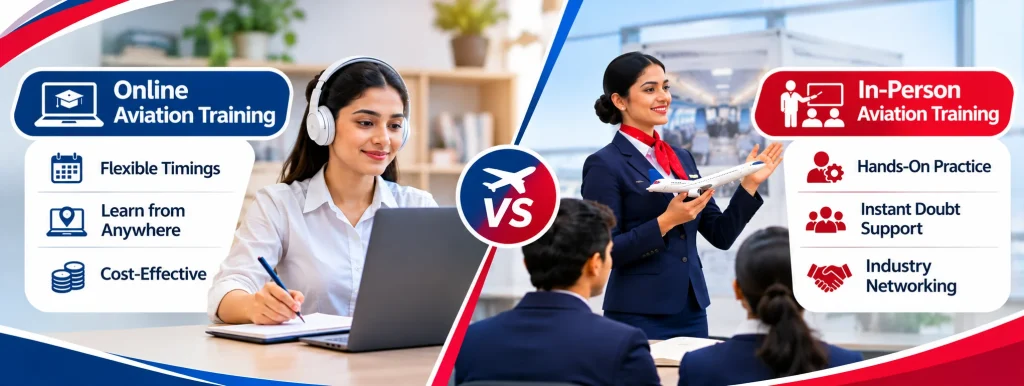
Online vs In-Person Aviation Training - Which Should You Choose

Still unsure? Use these lists to match your situation with the method that suits your goals and learning style.

Choose online aviation training if:

  • You work full time or study alongside
  • You live far from a training centre
  • You’re comfortable with laptops and apps
  • You learn well on your own
  • You want to save on travel costs
  • Your course is mostly theory
  • You need flexible timings
  • You can stay disciplined without reminders

Choose in-person aviation training if:

  • You’re a complete beginner
  • You need hands-on practice
  • You like getting doubts cleared right away
  • You find it hard to stay motivated alone
  • You want to build industry contacts
  • You’re aiming for customer-facing roles
  • You learn better with a fixed routine
  • You live near a training centre

Read More: How to Choose the Right IATA Course in Bahrain for Your Career Goals

Conclusion

So, which is better? It depends on you. Online is great for flexibility and theory. In-person wins on practice and feedback. For aviation career training, many learners do best with a mix: study theory online, then sharpen skills in a classroom. The best choice is the one you’ll actually finish.

If you’re planning IATA training in Bahrain, talk to the team at Akbar Training Center. They offer a free consultation to help you pick the right course and learning method. Message them on WhatsApp or call to get started.
Start Your Aviation Career with the Right IATA Training

Ready to take the next step towards a career in aviation or travel? Akbar Training Center offers industry-focused training to help you build practical skills and prepare for opportunities in the travel and airline industry. Explore our IATA course in Bahrain discuss your eligibility with our admissions team, and find the right program for your career goals.

Explore Aviation Courses

Frequently Asked Questions (FAQs)

It depends on the course. Theory-based subjects work well online, but skills like ticketing and customer handling need live practice. Many learners combine both for the best result.
Validity depends on the provider and the course. Always check that the training center is IATA authorized and that your certificate comes from IATA. Ask the center directly before you enrol.
Yes, it's possible, but employers also look for practical skill and recognised certification. Add hands-on practice, an instructor-led module or an internship to strengthen your profile.
The IATA Foundation in Travel & Tourism is a common starting point. It runs 175 hours over 4 to 6 months and covers fare calculation, ticketing and travel documents.
It varies by course. At Akbar Training Center, courses range from 1 week (Serving the Travel Customer) to 4 to 6 months (IATA Foundation).

Comment

WhatsApp Instagram Facebook LinkedIn YouTube
×
Akbar Training Center

Enquire Now

Fill the form below and our team will contact you shortly.

Apply Now